01
Support and success teams
Customers ask the same questions your help docs, policies and manuals already answer. The assistant answers from them and shows the source.

Your team and customers ask the same questions your documents already answer. We build an AI assistant that answers from your own documents, websites and databases, cites the source for every answer, and says “I don't know” instead of guessing. Fixed-scope packages, from $600 and 7 days.
Custom LLM integration · Need it to take actions? Agent packages · Fix an existing RAG chatbot
Who it's for
RAG (retrieval-augmented generation) means the AI first looks up the relevant passages in your own documents, websites or databases, then writes its answer from them. If the answer is in a document somewhere, people shouldn't have to find it by hand, and the AI shouldn't make one up.
Customers ask the same questions your help docs, policies and manuals already answer. The assistant answers from them and shows the source.
Staff dig through PDFs, wikis and shared drives for one paragraph. They ask in plain words instead, and see which document the answer came from.
You want document Q&A inside your own app. The Advanced package ships an API, a chat widget and an embed, with access rules per user.
What you get
Every package cites its sources and is tested on real questions before handover.
Your documents, websites and databases are split, embedded and stored in a vector database (pgvector or your choice), and stay in sync when documents change.
Search combines meaning and exact keywords, so product names, part numbers and codes are found as well as paraphrased questions.
Every answer shows where it came from, and the assistant says “I don't know” instead of guessing when your content doesn't cover the question.
On the Advanced package, rules decide who can see what, so an answer never quotes a document the person asking isn't allowed to read.
Before handover we run it on a set of real questions and write up how well it answers, so you know where it stands before anyone relies on it.
You get the code, the prompts, the test question set and a short guide to keeping it up to date. Your data stays in your own database or cloud account.
Packages
Prices are starting points for the scope in each column. On a short call we confirm the scope and the fixed price before any work starts.
| Package | Starter | Standard | Advanced |
|---|---|---|---|
| Price | from $600 | from $1,200 | from $2,500 |
| Delivery | 7 days | 14 days | 21 days |
| Documents | Up to 200 | Up to 5,000 | Up to 50,000 |
| Sources | Files (PDF, DOCX) | Files and one website | Files, websites and one database |
| Interface | API endpoint | API and a web chat widget | API, web chat widget and an embed in your app |
| Source citations | Included | Included | Included |
| Keyword + meaning search | Not included | Included | Included |
| Access rules per user | Not included | Not included | Included |
| Test questions and quality report | 20 questions | 50 questions | 100 questions |
| Revisions | 1 | 2 | 3 |
What we need from you: sample documents, 10–20 real questions people ask, where it should run (your cloud or ours), and your OpenAI or Anthropic API key. Bigger or custom-scoped work goes through LLM integration.
How it works
The same discover, build and launch rhythm as every Woyce project (our process), sized to a package.
A short call to pick the package. You send sample documents, 10–20 real questions people ask, where it should run, and your OpenAI or Anthropic API key.
We split, embed and store your content, set up search (meaning plus keywords from Standard up) and keep it in sync with your sources.
The assistant answers your test questions with citations; we fix what it gets wrong and write the quality report.
The API (and the widget or embed in your package), the code, the prompts, the test set and the upkeep guide, with the revisions your package includes.
Proof
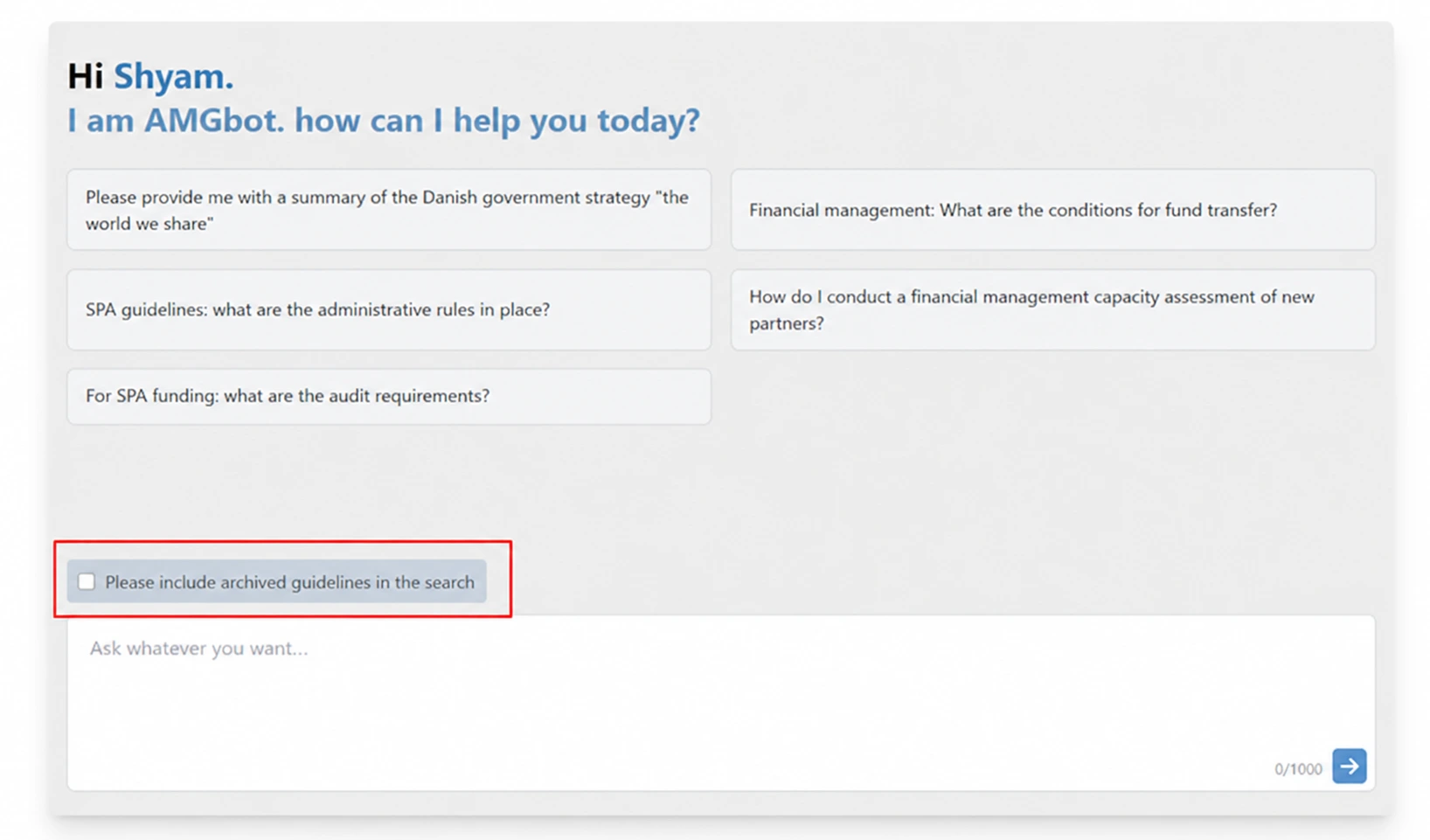
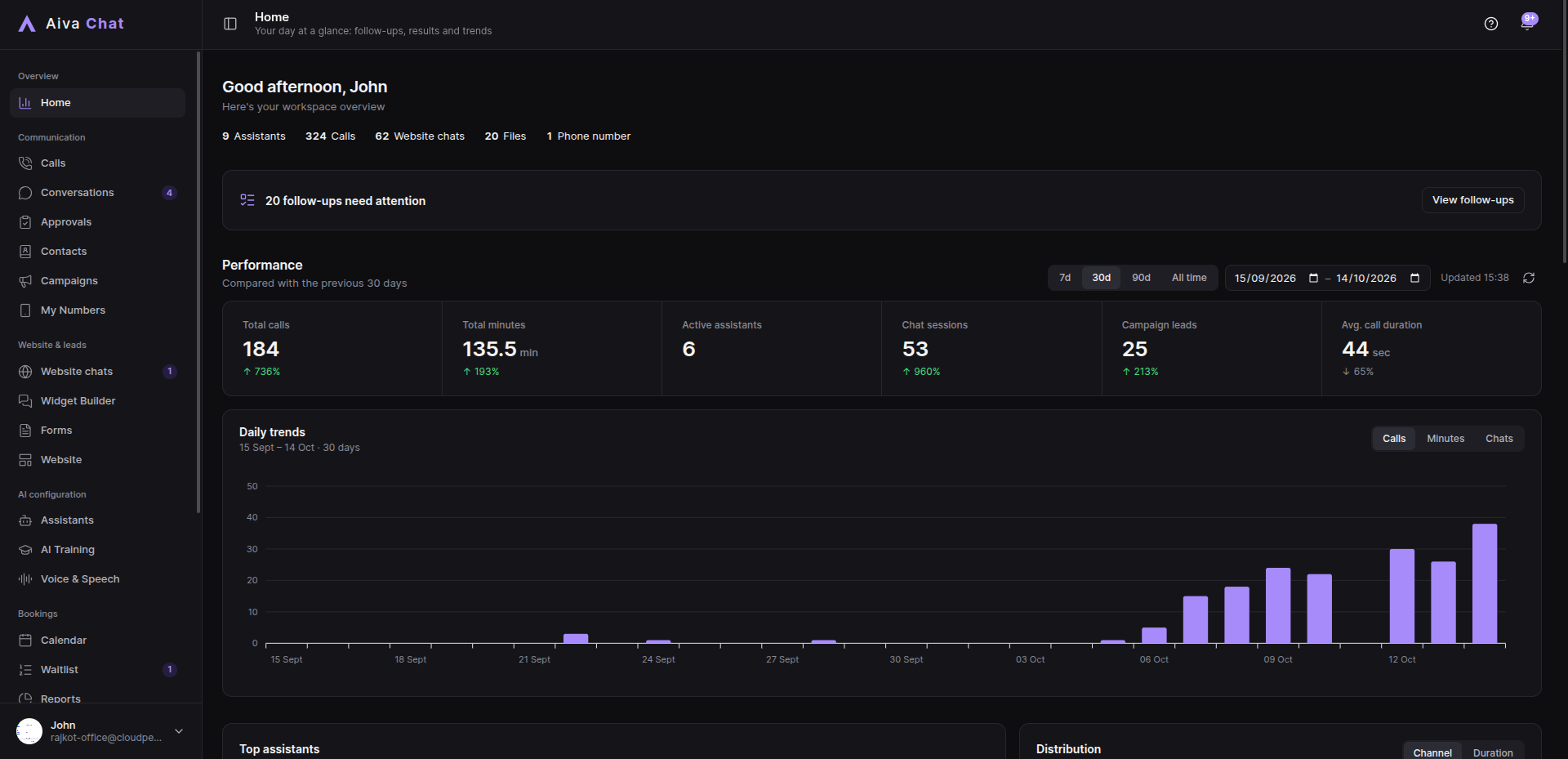
RAG over 50,000+ documents on pgvector with OpenAI embeddings, a compliance-advisory platform (Krone), and the knowledge answers inside Aiva Chat, our own multi-tenant AI SaaS.
KroneCompliance
AIVA ChatOur product
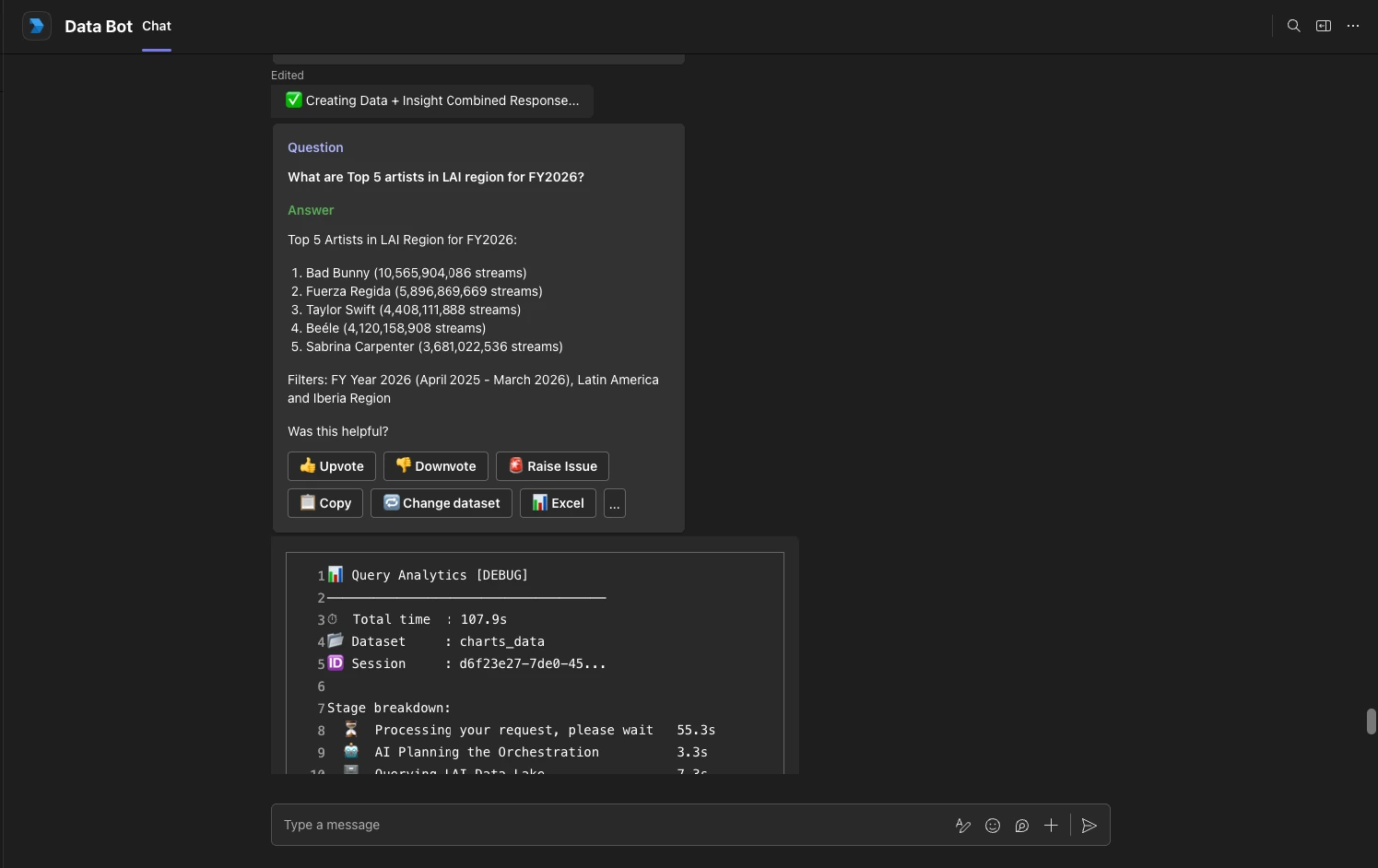
AI Chatbot for Chroma DataEnterprise data
FAQ
RAG (retrieval-augmented generation) means the AI looks up the relevant passages in your own documents, websites or databases first, then writes its answer from them. RAG development is building that pipeline: splitting and embedding your content, storing it in a vector database, searching it well, and showing the source for every answer.
Our fixed-scope packages start from $600 (Starter: up to 200 documents, 7 days), from $1,200 (Standard: up to 5,000 documents, 14 days) and from $2,500 (Advanced: up to 50,000 documents, 21 days). We confirm the scope and the fixed price on a short call before work starts.
OpenAI by default. Anthropic, Gemini or AWS Bedrock on request.
In your own database or cloud account. We don't keep copies.
Sample documents, 10–20 real questions people ask, where it should run (your cloud or ours), and your OpenAI or Anthropic API key.
The index stays in sync with your sources, so new and changed documents are used on the next question without retraining a model. The handover guide explains how to keep it up to date.
Yes, but that is an agent rather than a RAG assistant: see our AI agent development packages, which call your tools and APIs, with RAG included from the Standard package up.
LLM integration is our wider, custom-scoped service for putting language models into products and workflows. This page is one focused job, an assistant that answers from your documents, sold as fixed packages with a set number of documents, sources and test questions.
Who leads this work

Founder & AI Solutions Architect
Takes a business problem to a production AI architecture — where AI should act, which models and tools, how it scales, and what it costs to run.
Plain-English guides on how retrieval works and when to use it.
The wider practice
The same engineers build agents, RAG, automation, copilots and voice, plus the web and mobile apps around them.
Tell us about your project. We'll send back a fixed-price proposal within 48 hours, or tell you honestly if we're not the right fit.