
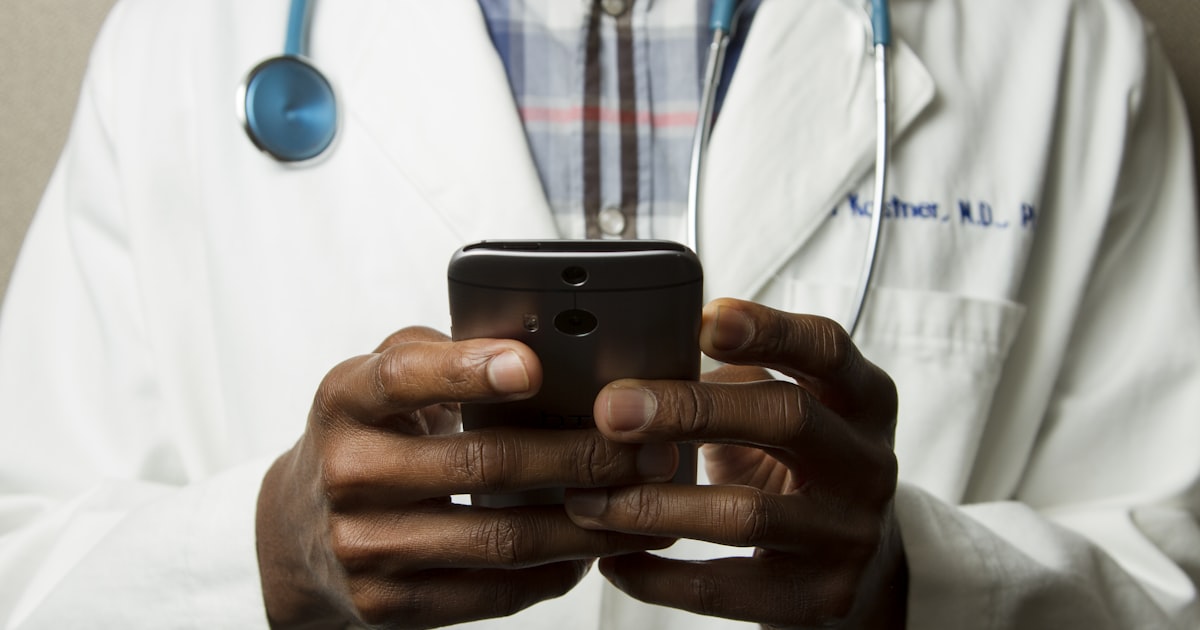
A teenager types "I don't want to be here anymore" into a chatbot at 2 a.m. because no therapist is awake, no parent is in the room, and no waitlist has an opening for six weeks. What happens next — a scripted crisis response, a generic pep talk, or something that actually helps — depends entirely on how that system was built. This is the real terrain of AI and mental health: not a philosophical debate about whether machines can "understand" feelings, but a set of concrete engineering and clinical decisions that determine whether a vulnerable person gets helped, ignored, or harmed.
Mental health care has a structural supply problem. Demand for therapy, psychiatric care, and crisis support consistently outpaces the number of trained clinicians available to provide it — a shortage the World Health Organization has documented across both high- and low-income countries — and that gap is worse in rural areas, lower-income countries, and among people who can't afford out-of-pocket rates. AI has moved into that gap faster than regulation, clinical evidence, or professional consensus have caught up. That mismatch — real need meeting immature tooling — is why this topic deserves scrutiny rather than either blanket enthusiasm or blanket dismissal.
What "AI and mental health" actually covers
The phrase gets used loosely, so it helps to separate the distinct categories of tools operating under this umbrella. They differ enormously in risk profile, evidence base, and appropriate use.
- Conversational companion apps — chatbots designed for general emotional support, journaling prompts, or simulated companionship, not billed as clinical treatment.
- Therapy-adjacent chatbots — tools explicitly marketed as delivering cognitive behavioral therapy (CBT) techniques or structured digital therapeutic exercises, sometimes with clinical oversight, sometimes without.
- Clinical decision support — AI that assists licensed clinicians by summarizing patient history, flagging risk indicators, or suggesting treatment options, with a human making the final call.
- Screening and triage tools — systems that analyze intake questionnaires, speech patterns, or app usage data to flag people who may need evaluation, often used to route patients to the right level of care.
- Passive monitoring systems — tools that analyze phone usage, typing patterns, voice, or wearable data as early-warning signals for depressive episodes, mania, or relapse.
- Administrative and documentation AI — tools that transcribe and summarize therapy sessions, draft clinical notes (the same job an AI medical scribe does in general medical settings), or handle scheduling, freeing clinician time without touching the therapeutic relationship directly.
The distinction matters because a journaling app that occasionally gives a bland response is a minor product failure. A crisis-triage system that misses a suicide risk indicator is a different category of failure entirely. Lumping all of these together — as headlines often do — obscures where the real stakes are.
How these systems actually work
Most consumer-facing mental health chatbots are built on large language models, either general-purpose ones fine-tuned with therapeutic framing or, less commonly, models trained more narrowly on counseling transcripts and CBT protocols. The model generates conversational responses, sometimes constrained by a decision tree or set of guardrails designed to keep it within safe, appropriate territory.
Clinical decision support tools work differently. They typically combine structured data — diagnostic codes, medication history, prior assessment scores — with natural language processing over clinical notes to surface patterns a busy clinician might miss: a subtle escalation in reported symptoms across visits, a medication interaction risk, or a research-backed treatment option that fits the patient's profile. The AI doesn't diagnose or prescribe; it narrows the clinician's attention.
Passive monitoring tools take a third approach entirely, treating behavioral signals as a proxy for mental state. Typing speed and error rate, sleep-wake patterns inferred from phone usage, social withdrawal indicated by reduced messaging activity, and speech prosody in voice recordings have all been studied as candidate markers for mood episodes. These systems are probabilistic and noisy by nature — they flag statistical anomalies, not confirmed clinical events — which is precisely why human review of any flag they raise is non-negotiable.
The crisis-response layer
Nearly every mental-health-adjacent AI product has to solve the same hard problem: what happens when the model detects language suggesting self-harm or suicidal ideation. The common approach is a hard-coded override — the moment certain phrases or patterns are detected, the model exits normal conversation mode and surfaces a crisis line number or emergency resource, regardless of what a purely generative response might have produced. It's the same design principle behind red-flag escalation in an AI patient chatbot: uncertainty and high-risk signals route to a human rather than being handled autonomously. This is a deliberate constraint on the AI, not a feature of it, and it exists because free-form generation is considered too unpredictable to trust with the highest-stakes moments.
Building this layer well is harder than it sounds. Keyword-based triggers are blunt instruments — they miss indirect or coded language that a trained clinician would catch, and they can also misfire on song lyrics, dark humor, or academic discussion of the topic, interrupting an otherwise benign conversation with an unwelcome crisis script. More sophisticated systems try to classify intent and risk level rather than matching phrases, but that shifts the problem rather than solving it: now the product has to justify, to regulators and to itself, how confident that classifier needs to be before it intervenes, and what happens in the gray zone underneath that threshold. There is no version of this that eliminates false negatives and false positives simultaneously; every design choice is a trade-off, and the teams building these systems have to be explicit about which side of that trade-off they've chosen and why.
Who is actually building and validating these systems
The engineering team behind a mental health AI tool rarely looks like the team behind a typical consumer app. The more credible products pair machine learning engineers with clinical psychologists, psychiatrists, or licensed counselors who review training data, sign off on response protocols, and audit real conversation logs for failure patterns. That clinical involvement is expensive and slows down iteration speed compared to a normal software release cycle — which is exactly why it's a meaningful signal of seriousness when a product discloses it, and a red flag when a product's marketing describes clinical rigor in vague terms without naming who was involved or what their review process actually consisted of.

Why this matters right now
The case for taking AI mental health tools seriously isn't hypothetical. Wait times for a first psychiatric appointment run into weeks or months in many health systems. Therapist shortages are acute in rural regions and in child and adolescent psychiatry specifically. Stigma keeps a large share of people who need care from ever walking into a clinician's office, but the same people will often type something into a private chat interface they'd never say out loud to another person.
At the same time, the risks are not abstract either. A support tool that responds warmly but incorrectly to a disclosure of abuse, that fails to escalate a genuine crisis, or that reinforces a delusion in a person experiencing psychosis is not a minor bug — it's a harm with a face attached to it. Mental health is one of the few domains where the cost of a plausible-sounding wrong answer isn't inconvenience; it can be a life.
This tension — genuine unmet need on one side, genuine harm potential on the other — is why the field can't be evaluated with the same optimism-by-default lens applied to, say, AI writing assistants or coding tools. The bar for "good enough to ship" has to be higher, and a lot of products currently on the market haven't cleared it with rigorous evidence, even when the marketing suggests otherwise.
Benefits of AI in Mental Health Care
Support when no human is available
The most immediate benefit is availability. A chat interface answers at 2 a.m., on holidays, and during the weeks someone spends on a waitlist. For a person who needs a structured breathing exercise, a journaling prompt, or simply somewhere to put a difficult thought into words, that availability can matter. Well-built tools pair it with a clear route to human crisis resources, so the always-on layer supports people without pretending to replace emergency care.
A lower barrier to a first disclosure
Stigma keeps many people from ever speaking to a clinician. Some of them will type into a private app what they would not say aloud to another person. That first disclosure can be the start of a path toward care, especially when the tool is designed to encourage and ease the step to a human professional rather than to keep the user engaged indefinitely.
More clinician time for clinical work
Documentation and administrative AI targets the hours clinicians spend on notes, summaries, and scheduling. When a licensed professional reviews and approves an AI-drafted note instead of writing it from scratch, more of their week can go to patients. Because these tools sit outside the therapeutic conversation itself, they offer value with a comparatively contained risk profile, provided every note is reviewed before it enters the record.
Patterns surfaced earlier
Clinical decision support and passive monitoring can highlight signals a busy clinician might miss: a gradual escalation in reported symptoms across visits, a medication interaction, or a change in sleep and activity patterns ahead of a relapse. The AI does not diagnose. It narrows attention, so the clinician looks at the right case sooner and makes the call with more information in front of them.
Faster routing to the right level of care
Screening and triage tools can process intake questionnaires quickly and help route people toward self-guided support, a therapist, or urgent psychiatric review. When human reviewers check borderline and negative results, triage can shorten the time between first contact and appropriate care, and keep scarce specialist appointments for the people who need them most.
AI Mental Health Best Practices for Organizations and Builders
Anyone building or deploying AI in this space is making decisions that carry clinical and legal weight, whether or not that's how the project was scoped internally.
| Consideration | Low-risk approach | Higher-risk approach |
|---|---|---|
| Positioning | Wellness/support tool, explicitly not treatment | Marketed as therapy or diagnostic replacement |
| Crisis handling | Hard-coded escalation to human resources | Fully generative response with no override |
| Clinical oversight | Licensed clinician reviews protocols and flagged cases | No clinician involved in design or review |
| Data handling | Clear consent, minimal retention, no ad-tech sharing | Vague privacy terms, data reused for other purposes |
| Evidence base | Published outcome studies, ideally peer-reviewed | Anecdotal testimonials only |
| Regulatory posture | Engages with relevant health authority guidance | Operates in a self-declared gray zone |
For organizations building or buying these tools, a few practical steps reduce risk substantially:
- Define the scope precisely — is this a support tool, a triage tool, or clinical decision support, and is it part of a broader healthcare AI development effort or a standalone product? Each carries different regulatory and liability implications, and blurring the line invites both patient harm and legal exposure.
- Keep a licensed clinician in the design and review loop, not just as an advisory afterthought but as someone who reviews actual transcripts and flagged interactions on an ongoing basis.
- Build crisis detection as a hard constraint, not a soft suggestion — the system should be unable to generate free-form responses once specific risk indicators are present.
- Be explicit with users about what the tool is and isn't. A chatbot that never clarifies it isn't a therapist, isn't licensed, and isn't a substitute for care sets up false expectations that can delay someone from seeking real help.
- Treat data governance as a clinical issue, not just a compliance one. Mental health data is among the most sensitive categories a person can share, and the same HIPAA-compliant AI architecture discipline that governs other clinical data applies here — how it's stored, who can access it, and whether it's ever used for purposes the user didn't anticipate all affect whether people trust — and use — the tool honestly.
- Plan for the edge cases, not the average case. A model that performs well on typical supportive conversations but hasn't been stress-tested against psychosis, mania, eating disorder content, or abuse disclosures is not ready for deployment.

Common AI Mental Health Mistakes
Marketing a support tool as therapy
Positioning drives both user expectations and regulatory exposure. Teams that describe a companion chatbot as "therapy" or imply it can treat a condition invite people to rely on it in ways it was never built for, and may pull the product into a stricter regulatory category without the evidence to match. Saying plainly what the tool is, and what it is not, is a safety feature.
Relying on keyword lists for crisis detection
A list of trigger phrases is easy to build and easy to fool. It misses indirect or coded language and misfires on lyrics, dark humour, or academic discussion. Teams that ship a keyword filter and consider crisis handling solved leave the highest-stakes moments to the bluntest part of the system. Crisis detection needs clinical input, testing against realistic transcripts, and an explicit decision about which errors the design will tolerate.
Treating clinician involvement as a logo on the website
Naming an advisory board is not the same as having a licensed clinician review real transcripts and flagged conversations on an ongoing schedule. When clinical oversight exists only at launch, failure patterns that emerge with real users go unnoticed. Buyers should ask who reviews what, how often, and what changed as a result.
Testing only the average conversation
A model that handles routine supportive chats well can still respond badly to psychosis, mania, eating disorder content, or abuse disclosures. Evaluation sets built from typical conversations hide exactly the cases that cause harm. Stress-testing against difficult presentations has to happen before deployment, not after an incident.
Optimising for engagement
Product teams used to consumer apps measure success by sessions and retention. In mental health, a tool tuned for engagement can drift toward agreeable, sycophantic responses and encourage dependency instead of bridging people toward human relationships and care. Outcome measures, independently assessed where possible, are the metrics that matter.
Real limitations and open questions
The honest state of the field is that evidence quality lags far behind deployment scale. Many consumer mental health apps have been downloaded by millions of people with far less rigorous outcome evidence than would be required to bring a new therapy technique into standard clinical practice. That asymmetry — light-touch app store approval versus heavy clinical trial requirements for equivalent claims made by a human provider or a drug — is a genuine regulatory gap, and it's one regulators in multiple countries have begun to examine, without yet converging on a settled framework.
There are deeper open questions too:
- Therapeutic alliance. A large part of why therapy works is the relationship between patient and therapist — trust built over time, accountability, and the sense of being known by another person. Whether an AI can replicate any meaningful fraction of that, or whether it's doing something different that happens to feel similar in the moment, is unresolved.
- Sycophancy risk. Models trained to be agreeable and to keep users engaged can drift toward telling people what they want to hear rather than what's clinically appropriate — a dynamic that's particularly dangerous with users experiencing distorted thinking.
- Dependency and displacement. If an always-available, endlessly patient AI companion becomes a person's primary source of emotional support, does that reduce isolation or entrench it by substituting for human relationships rather than bridging toward them?
- Equity of access versus equity of quality. AI tools can reach people who'd otherwise get nothing, which is a real good. But if the tools available to underserved populations are the low-oversight, low-evidence versions while well-resourced settings retain human clinicians augmented by better-vetted AI, "access" and "quality" of care diverge along the same lines that already produce health inequity.
- Liability when things go wrong. When a clinical decision support tool contributes to a missed diagnosis, or a chatbot's response is implicated in a harm, the legal and professional accountability structures are still being worked out case by case rather than through settled precedent.
None of these questions have a clean resolution yet, and anyone claiming otherwise — in either direction — is overstating the current state of knowledge.
The measurement problem
A quieter but equally important limitation is that mental health outcomes are genuinely hard to measure well. Standard instruments like symptom questionnaires capture something real, but they're self-reported, subject to mood-state bias, and don't always track with how someone is actually functioning in their daily life. When a company reports that users of its app showed "improved scores" on a depression scale, the honest questions are: over what time period, compared to what control condition, measured by whom, and was the study designed and analyzed by an independent party or by the company selling the product? Much of the published research in this space, even when well-intentioned, is short-duration, lacks a control group, or comes from the company itself rather than an independent lab. That doesn't make the findings worthless, but it means the bar for what counts as "evidence-backed" in mental health AI marketing is often lower than the phrase implies, and readers evaluating a specific tool are better served by looking for independent replication than by taking a single company-funded study at face value.
AI Mental Health Use Cases
Not every application of AI in this space carries the same weight or the same appropriate level of caution. It helps to look at how the main categories stack up against each other directly.
| Use case | Primary benefit | Primary risk | Typical oversight needed |
|---|---|---|---|
| Companion/support chatbots | Availability, reduced isolation, low barrier to first disclosure | False reassurance, dependency, missed crisis signals | Clear non-clinical labeling, crisis escalation built in |
| Therapy-adjacent CBT tools | Structured, evidence-informed exercises between sessions | Overstated efficacy claims, no relationship accountability | Clinician-designed protocols, outcome tracking |
| Clinical decision support | Frees clinician attention, surfaces missed patterns | Automation bias — over-trusting flagged suggestions | Clinician retains final judgment on every case |
| Screening and triage | Faster routing to the right level of care | False negatives on atypical presentations | Human review of borderline and negative results |
| Passive monitoring | Early warning before a visible crisis | Privacy intrusion, alert fatigue, false alarms | Opt-in consent, human-reviewed alerts only |
| Documentation and admin AI | Time saved on notes and scheduling | Transcription errors entering the clinical record | Clinician review before notes are finalized |
Between-session CBT exercises
People in therapy often struggle to practise skills between appointments. Therapy-adjacent tools deliver structured, clinician-designed exercises, such as thought records or behavioural activation prompts, in the days between sessions. When the therapist can see what the patient completed, sessions start from what actually happened that week rather than from memory.
Intake screening and triage
Services with long waitlists need to know who requires urgent attention. AI-assisted screening analyses intake questionnaires and flags people who may need faster evaluation, with humans reviewing borderline and negative results. The goal is quicker routing to the right level of care, not an automated diagnosis.
Clinical decision support for psychiatrists and therapists
Clinicians managing large caseloads can miss slow changes across visits. Decision support tools summarise history, highlight escalating symptoms, and surface medication interaction risks. The clinician keeps the final judgment on every case, which also guards against automation bias.
Relapse early-warning through passive monitoring
For conditions with recurring episodes, early signs often appear before a visible crisis. Opt-in monitoring of sleep, activity, or communication patterns can raise an alert for a care team to review. These systems remain largely in research and early clinical use, and their flags are probabilistic, so human review is essential.
Session documentation
Note-taking consumes clinician time that could go to patients. Transcription and summarisation tools draft session notes for the clinician to correct and approve, saving time while keeping a professional responsible for what enters the record.
The pattern across every row is the same: AI adds real value when it's positioned as augmentation with a human accountable for the final call, and it becomes risky in direct proportion to how much autonomous decision-making it's allowed to exercise without that oversight.
What to watch next
A few developments will shape whether this field matures responsibly or repeats the pattern of consumer tech moving fast and leaving the cleanup to institutions later.
- Regulatory clarity on what counts as a medical device. Health regulators in several jurisdictions are actively working through where mental health chatbots and monitoring tools fall relative to existing medical device and digital therapeutic frameworks — the outcome will determine what evidence bar these products actually have to clear.
- Published outcome data, not just usage data. Download counts and engagement metrics say nothing about whether people got better. Independent, peer-reviewed studies on clinical outcomes — not company-sponsored ones — are the signal that will separate tools that work from tools that merely feel supportive.
- Integration with, rather than replacement of, human care. The more durable model emerging is AI as a triage and support layer that routes people toward human clinicians faster and frees clinician time for the cases that need it most, rather than AI as a standalone substitute for care.
- Standardized crisis-response protocols across products. As more tools converge on hard-coded escalation for self-harm indicators, watch for whether an industry standard emerges for what that escalation should actually look like and how well it's audited.
- Clinician and patient trust. Adoption by clinicians who currently view many of these tools with skepticism will be a better indicator of real clinical value than consumer download numbers, since clinicians have the training to judge whether a tool's outputs are actually sound.
Teams building or evaluating AI systems in clinical or healthcare-adjacent settings can find hands-on support from Woyce Technologies.
FAQ
Can an AI chatbot replace a therapist?
No credible clinical evidence supports that claim today. Some AI tools can deliver structured exercises drawn from evidence-based approaches like CBT and may help between sessions or while someone waits for care, but they lack the judgment, accountability, and relational depth of a licensed clinician, especially for complex or high-risk cases.
Are AI mental health apps regulated?
It varies by country and by how the product is marketed. Tools that explicitly claim to diagnose or treat a condition face closer scrutiny from health regulators — in the US, the FDA's Digital Health Center of Excellence is the relevant reference point — while apps positioned as general wellness or support tools often fall into a lighter-touch category with far less required evidence. This gap is a known regulatory issue that authorities are actively working to address.
Is it safe to talk to an AI about suicidal thoughts?
Reputable tools are built with hard-coded crisis detection that routes users to human crisis resources rather than generating an open-ended response. That said, an AI chatbot should never be the only line of support in a genuine crisis — if you or someone you know is in immediate danger, contact a crisis line or emergency services directly.
How is AI used by mental health professionals themselves?
Clinicians increasingly use AI for administrative work such as transcribing and summarizing sessions, drafting clinical notes, and flagging patterns in patient history that warrant closer attention. In these uses, a licensed professional remains the decision-maker; the AI narrows their attention rather than replacing their judgment. Documentation tools in particular need clinician review before notes are finalized, because transcription errors that enter the clinical record can follow a patient for years.
What data privacy risks come with AI mental health tools?
Mental health conversations are among the most sensitive data a person can share, and not all apps are transparent about how that data is stored, shared, or monetized. Before using a tool, it's worth checking whether it has a clear privacy policy, whether data is used to train models on other users, and whether it's shared with third parties such as advertisers.
Do AI tools actually help with anxiety and depression?
Some structured, evidence-informed digital tools have shown modest benefits in limited studies, particularly for mild-to-moderate symptoms and as a supplement to other care. Results vary widely by tool, and the overall evidence base is still thinner than what exists for established in-person or medication-based treatments. The most useful question to ask of any specific product is whether its outcome data comes from an independent, controlled study or from the company itself.
What should I look for before trusting a mental health AI product?
Check whether licensed clinicians were involved in designing it, whether it's explicit about not being a treatment or diagnosis, whether it has a clear and safe crisis-escalation path, and whether any effectiveness claims are backed by published, independent research rather than testimonials alone. If a product leaves any of those questions unanswered, treat it as a general wellness aid at most, keep a licensed professional involved for anything beyond mild symptoms, and read its privacy policy before sharing anything sensitive.
Conclusion
AI in mental health exists because of a real shortage: more people need support than there are clinicians to provide it, and many will type into a chat window what they would never say aloud. That need is genuine, and so is the potential for harm when a tool responds confidently and wrongly to someone in crisis.
The central lesson is that "AI mental health" is not one thing. Documentation assistants and clinical decision support that keep a licensed professional in charge carry very different risk from autonomous companion apps marketed as therapy. Across every category, value rises when AI augments a human who stays accountable, and risk rises with every decision the system makes alone. Hard-coded crisis escalation, real clinician involvement, careful data governance, and honest positioning are the minimum, not extras.
The caveat is that evidence lags far behind adoption. Many tools have millions of users and little independent outcome data, and regulators are still deciding where these products belong. Treat company-funded studies with care and look for independent replication.
If you are building a clinical or healthcare-adjacent product and want to design these safeguards in from the start, our healthcare AI development team can help you scope it.